As an artist, I often find myself pondering the delicate balance that exists between labeling a work of art as 'fine' art versus 'commercial' art. This tension is rooted in the age-old debate surrounding the true purpose of art and the extent to which artistic creation must remain pure and uninfluenced by monetary or market-driven considerations. When a piece of art is considered 'fine,' it is perceived to represent the artist's authentic expression of emotion and thought, with its worth being measured by the emotional and intellectual connection it forms with its audience. In contrast, 'commercial' art is often seen as a sellout, lacking in the same depth of soul and merely serving a functional purpose in the world of marketability and consumerism. Yet, upon deeper reflection, isn't there beauty to be found in the ability of an artist to communicate a message in a way that resonates with the masses whilst remaining true to their own artistic vision? Perhaps, it's time to challenge these traditional dichotomies and celebrate the fluidity and multifaceted nature of artistic expression in all its forms.
As an artist, I find the world of fine art to be a constantly evolving and beautifully complex expression of human emotion and perception. In essence, fine art encompasses various mediums and disciplines, such as painting, sculpture, printmaking, photography, and drawing, all of which portray an artist's unique interpretation of reality or imagination. Each brushstroke, chisel mark, or captured moment brings forth a story, a feeling, or even a question that connects the artist with their audience. The allure of fine art lies in its ability to transcend mere aesthetics and evoke a deeper connection, sparking conversations that span diverse cultures, time periods, and ideologies. Furthermore, the creative process of fine art, infused with passion and dedication, leaves an indelible mark on the world, allowing us to observe and appreciate its boundless beauty and intricacy. To truly grasp the essence of fine art is to engage the senses, delve into the human experience, and revel in the sublime dance of expression and interpretation.
Ah, the mesmerizing world of commercial art! Imagine the intersection where creativity meets business, colors collide with commerce, and each brushstroke serves a purpose beyond mere aesthetics. In an exuberant symphony of art and marketing, commercial art captivates the audience while gently ushering them down a path towards a specific idea or product. By breathing life into advertisements, package designs, logos, and promotional materials, talented commercial artists seamlessly blend the enchanting realms of imagination and functionality. Tenderly orchestrating a connection between communities and the brands they love, commercial art holds the essence of visual communication in the gentle caress of its pigments. As the world dances on in a vibrant waltz of ideas and passions, commercial art unfurls its banners amidst the rhythm of our daily lives, whispering its melodies in the colors and patterns that adorn our world.
WHAT IS COMMERCIAL ART?
This piece fills the idea that I hold for what commercial art is. To me, this piece is artistic and cute and while enticing the viewer in with the cuteness it provides a commercial statement about the product and what the product can do for the user. In this case the user is probably older, but the user wants to feel younger and more energetic, and this “Great energy food” will provide this youthful stamina.
Personally, I imagine the intersection where creativity meets business to be the world of commercial art. This is where colors collide with commerce, and each brushstroke serves a purpose beyond mere aesthetics. In an exuberant symphony of art and marketing, commercial art captivates the audience while gently ushering them down a path towards a specific idea or product.
Commercial art has a way of breathing life into advertisements, package designs, logos, and promotional materials, talented commercial artists seamlessly blend the enchanting realms of imagination and functionality. Tenderly orchestrating a connection between communities and the brands they love; commercial art holds the essence of visual communication in the gentle caress of its pigments. As the world dances on in a vibrant waltz of ideas and passions, commercial art unfurls its banners amidst the rhythm of our daily lives, whispering its melodies in the colors and patterns that adorn our world.
WHAT IS CREATIVE ART
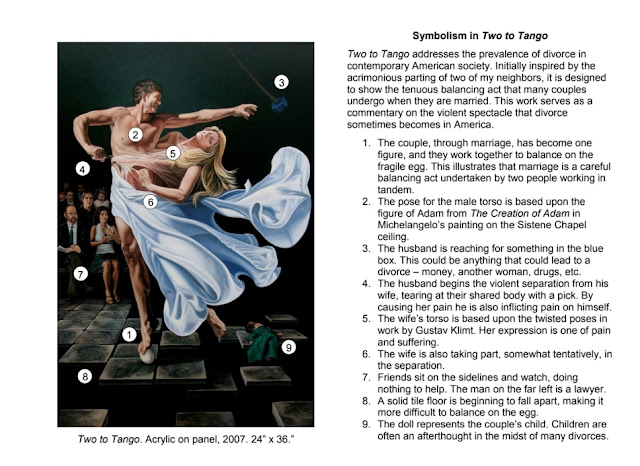
I selected this piece because I like the way that the artist selected to express the struggle of divorce. The children on the floor, the push and pull of the agony of the tugging drama, the onlookers, and the piecemealed floor with large cracks. To finalize it the artist selected to add in a rope with some sort of swinging feature, this make me think that the artist was attempting to provide a way out from the struggle.
As an artist, I find the world of fine art to be a constantly evolving and beautifully complex expression of human emotion and perception. In essence, fine art encompasses various mediums and disciplines, such as painting, sculpture, printmaking, photography, and drawing, all of which portray an artist's unique interpretation of reality or imagination. Each brushstroke, chisel mark, or captured moment brings forth a story, a feeling, or even a question that connects the artist with their audience.
The allure of fine art lies in its ability to transcend mere aesthetics and evoke a deeper connection, sparking conversations that span diverse cultures, time periods, and ideologies. Furthermore, the creative process of fine art, infused with passion and dedication, leaves an indelible mark on the world, allowing us to observe and appreciate its boundless beauty and intricacy. To truly grasp the essence of fine art is to engage the senses, delve into the human experience, and revel in the sublime dance of expression and interpretation.
Image Source: Two to Tango, Acrylic on panel painting by Kevin Grass, 24" x 36," 2006. kevingrass.art